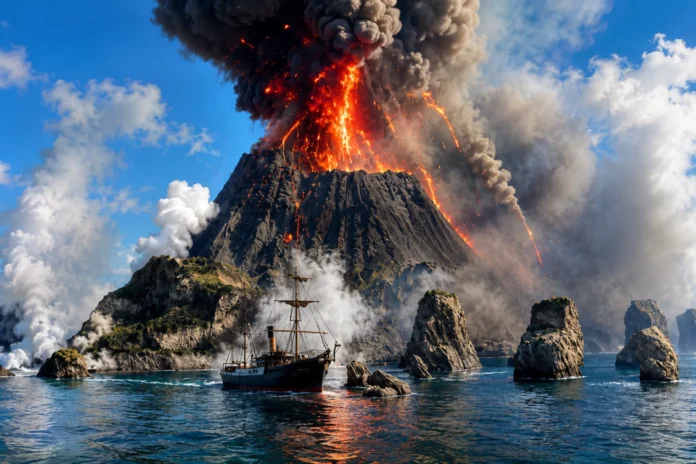

Skies Above Indonesia Split Beneath Fiery Violence
In August 1883, Krakatoa unleashed one of history’s most terrifying volcanic catastrophes worldwide. Violent explosions shattered surrounding islands while darkness consumed skies above the Indonesian archipelago.
Soon afterward, enormous shockwaves spread outward across oceans and distant continental regions worldwide. People reportedly heard the eruption thousands of miles away across remote sections worldwide. Historians and scientists still regard Krakatoa among humanity’s most destructive natural disasters ever.
Meanwhile, massive explosions devastated nearby coastal settlements through volcanic debris and towering tsunamis afterward. Entire communities disappeared beneath violent waves while survivors described terrifying scenes across surrounding regions. Ash darkened skies for days while atmospheric shockwaves circled Earth multiple consecutive times. Krakatoa transformed from a volcanic island into global history’s most infamous geological catastrophe.
Ancient Pressure Beneath Krakatoa Reached Breaking Point
Long before catastrophic explosions erupted, Krakatoa rested within Indonesia’s dangerous Sunda Strait region. Powerful geological forces beneath surrounding waters slowly increased volcanic pressure beneath the island.
At the same time, tectonic plates collided constantly beneath the seafloor surrounding Krakatoa afterward. The Indo Australian Plate pushed beneath the Eurasian Plate across volatile regional fault systems. Extreme underground pressure gradually accumulated beneath magma chambers hidden below Krakatoa’s volcanic structure.
Meanwhile, volcanic activity increased noticeably during months preceding Krakatoa’s catastrophic destructive eruption afterward. Residents near surrounding islands reported unusual earthquakes, ash clouds, and distant underground rumbling frequently. Sailors crossing nearby waters observed smoke rising above Krakatoa before catastrophic explosions eventually emerged.
Elsewhere, scientists believe trapped gases beneath magma chambers intensified pressure inside Krakatoa continuously afterward. Underground heat and volcanic material expanded relentlessly beneath weakened sections throughout the unstable island. Small eruptions occurred repeatedly while nearby residents struggled understanding approaching catastrophic geological danger. Volcanic ash occasionally darkened skies while distant explosions echoed across surrounding regional waters.
Consequently, nearby communities faced growing uncertainty as warning signs intensified throughout surrounding Indonesian territories afterward. Fishermen and merchants reportedly noticed strange ocean behavior near Krakatoa before devastating explosions emerged. Frequent tremors unsettled villages while volcanic smoke expanded steadily above the dangerous island afterward. Many residents underestimated approaching disaster because enormous eruptions remained historically unfamiliar throughout nearby communities.
Nevertheless, geological pressure beneath Krakatoa eventually surpassed natural structural limits beneath the unstable volcano. Violent underground forces prepared catastrophic explosions that later shocked humanity across distant continental regions. Krakatoa approached destruction silently while surrounding communities remained dangerously close to unimaginable volcanic devastation.
Explosions Across Krakatoa Shattered the Surrounding Seas
Eventually, volcanic pressure beneath Krakatoa erupted violently during late August 1883 across Indonesia afterward. Massive explosions tore through the island while ash and debris darkened surrounding skies.
Soon afterward, Krakatoa unleashed several catastrophic explosions that devastated nearby islands and surrounding waters. The most powerful eruption occurred during August twenty seventh beneath terrifying atmospheric and geological conditions. Enormous volcanic columns surged upward while shockwaves expanded rapidly across surrounding regional seas.
Meanwhile, witnesses described deafening explosions, complete darkness, and terrifying ocean conditions throughout nearby territories afterward. Sailors reported violent pressure waves while volcanic debris rained continuously across surrounding waters afterward. Ash clouds blocked sunlight completely while panic spread rapidly among vulnerable coastal communities nearby. Explosive force shattered windows far away while nearby residents suffered catastrophic physical devastation afterward.
Elsewhere, enormous sections of Krakatoa collapsed beneath surrounding seawater after repeated catastrophic eruptions occurred. Scientists later concluded volcanic chambers emptied rapidly before much of the island collapsed afterward. Violent interactions between seawater and magma intensified explosions beyond previously unimaginable destructive levels worldwide. Massive waves surged outward while volcanic debris buried sections across nearby islands afterward.
Consequently, survivors described horrifying scenes filled with fire, darkness, ash, and destructive ocean waves afterward. Entire settlements vanished rapidly while terrified residents attempted escape from collapsing coastal territories nearby. Witness accounts described unbearable noise while skies above surrounding waters glowed with volcanic fire. Krakatoa transformed surrounding seas into catastrophic landscapes filled with destruction, death, and widespread panic.
Sound Waves Circled Earth After Krakatoa Erupted
After catastrophic explosions destroyed Krakatoa, extraordinary soundwaves traveled across enormous global distances afterward. Scientists still study the eruption because few historical events produced comparable atmospheric force worldwide.
Soon afterward, people thousands of miles away reportedly heard Krakatoa’s violent explosions clearly afterward. Residents across Australia and distant Indian Ocean islands described loud cannon like explosive sounds. Historical records later confirmed the eruption produced among humanity’s loudest documented natural sounds ever.
Meanwhile, atmospheric pressure waves from Krakatoa traveled repeatedly around Earth after catastrophic explosions occurred. Scientific instruments recorded unusual pressure fluctuations as shockwaves circled the planet several consecutive times. Researchers later analyzed those measurements carefully because nineteenth century technology rarely captured atmospheric disturbances globally. Krakatoa provided scientists valuable evidence regarding how powerful explosions interact with Earth’s atmosphere afterward.
Elsewhere, people near Krakatoa suffered devastating physical effects from extraordinary explosive pressure afterward. Some survivors reportedly experienced ruptured eardrums after violent atmospheric shockwaves struck nearby territories forcefully. Deafening explosions terrified sailors while enormous soundwaves traveled rapidly across surrounding regional waters afterward. Witnesses described unbearable noise levels while volcanic debris darkened skies above nearby communities afterward.
Consequently, scientists estimate the eruption reached astonishing sound levels near Krakatoa’s immediate vicinity afterward. Modern researchers believe explosive force exceeded ordinary human comprehension because atmospheric conditions amplified pressure dramatically. Krakatoa demonstrated how natural disasters produce destructive energy capable of affecting distant populations worldwide. Extraordinary soundwaves transformed the eruption into one of history’s most scientifically significant geological events.
Nevertheless, scientific fascination surrounding Krakatoa continues more than one century after catastrophic destruction occurred. Researchers frequently examine historical accounts because modern instruments never documented identical natural explosions afterward. Krakatoa remains essential within geological research because extraordinary soundwaves revealed Earth’s atmospheric interconnectedness clearly. The eruption proved violent natural disasters can affect humanity far beyond immediate geographical boundaries.
Towering Tsunamis Swallowed Entire Coastal Communities
After Krakatoa collapsed violently, enormous tsunamis surged outward across surrounding Indonesian coastal regions afterward. Massive seawater displacement transformed nearby shorelines into catastrophic zones filled with widespread destruction.
Soon afterward, towering waves crashed into vulnerable coastal settlements throughout Java and Sumatra afterward. Entire villages disappeared beneath violent seawater while survivors fled desperately toward elevated surrounding terrain. Thousands of residents perished rapidly after destructive tsunamis overwhelmed densely populated coastal communities nearby.
Meanwhile, maritime devastation spread rapidly across regional shipping routes and surrounding fishing communities afterward. Powerful waves destroyed ports while ships crashed violently against shorelines and submerged coastal structures. Survivors described terrifying darkness while enormous seawater surges carried debris across populated settlements afterward. Tsunamis devastated transportation networks while communication between surrounding communities collapsed beneath widespread destruction.
Elsewhere, panic spread throughout nearby regions as survivors searched desperately for missing family members afterward. Coastal residents attempted escape while repeated waves struck vulnerable territories without substantial warning beforehand. Historical records later estimated tens of thousands perished after catastrophic tsunamis followed Krakatoa’s eruption. Entire communities vanished permanently while devastated survivors struggled rebuilding lives across destroyed coastal landscapes.
Consequently, Krakatoa’s tsunamis became among history’s deadliest volcanic disaster related ocean catastrophes worldwide afterward. Scientists later concluded caldera collapse beneath seawater intensified tsunami formation across surrounding regional waters. The disaster demonstrated how volcanic eruptions can unleash devastating oceanic destruction across enormous distances. Krakatoa transformed peaceful coastlines into horrifying landscapes filled with death, panic, and permanent devastation.
Ash Filled Earth’s Skies and Altered Global Climate
After catastrophic explosions subsided, volcanic ash spread rapidly across Earth’s upper atmosphere afterward. Krakatoa’s eruption produced worldwide atmospheric consequences that scientists still examine carefully today.
Soon afterward, enormous ash clouds and sulfur aerosols drifted across multiple continents worldwide afterward. Fine volcanic particles blocked portions of sunlight while global temperatures gradually declined afterward. Scientists later connected unusual climate patterns directly with Krakatoa’s massive atmospheric volcanic emissions.
Meanwhile, people across distant countries reported vivid red sunsets following Krakatoa’s catastrophic eruption afterward. Brilliant orange and crimson skies appeared frequently while volcanic particles scattered sunlight across Earth. Artists and writers documented extraordinary atmospheric colors because unusual sunsets persisted throughout several subsequent years. Krakatoa transformed ordinary evening skies into spectacular displays visible across enormous global distances afterward.
Elsewhere, researchers studied Krakatoa carefully because atmospheric effects revealed important climate related scientific principles afterward. Scientists recognized volcanic eruptions could influence worldwide temperatures through enormous airborne particle distribution patterns. Atmospheric observations following Krakatoa improved scientific understanding regarding volcanic aerosols and global climate systems. The eruption demonstrated Earth’s interconnected atmosphere through measurable worldwide environmental consequences afterward.
Consequently, Krakatoa became historically significant beyond immediate destruction throughout Indonesia and surrounding regional waters afterward. Researchers frequently reference the eruption while studying climate effects from powerful volcanic catastrophes worldwide. Krakatoa proved violent geological disasters can reshape atmospheric conditions across distant continental regions afterward. The eruption altered scientific understanding regarding climate vulnerability and Earth’s fragile environmental balance.
Anak Krakatau Rose From Ruins Beneath Restless Waters
After Krakatoa’s destruction, volcanic activity beneath surrounding waters never completely disappeared afterward. Powerful geological forces continued shaping the unstable region beneath Indonesia’s dangerous Sunda Strait afterward.
Decades later, a new volcanic island gradually emerged from submerged volcanic ruins afterward. Scientists eventually named the growing volcano Anak Krakatau, meaning Child of Krakatoa locally. Volcanic eruptions continued regularly while the island expanded steadily above surrounding ocean waters.
Meanwhile, Anak Krakatau attracted global scientific attention because persistent activity threatened nearby populations afterward. Researchers monitored eruptions carefully while seismic instruments tracked underground geological movement continuously afterward. Frequent volcanic explosions demonstrated how dangerous conditions remained throughout the historically unstable regional environment. Scientists recognized Anak Krakatau represented direct geological continuation from Krakatoa’s catastrophic nineteenth century destruction.
Elsewhere, volcanic activity surrounding Anak Krakatau intensified periodically during subsequent decades afterward. Ash clouds, lava flows, and explosive eruptions repeatedly disrupted surrounding Indonesian maritime territories afterward. Authorities established exclusion zones while scientists warned nearby communities regarding continuing volcanic hazards regularly. Anak Krakatau remained dangerously unpredictable because underground tectonic pressure constantly reshaped surrounding geological structures.
Consequently, scientists consider the Sunda Strait among Earth’s most volcanically active dangerous regions worldwide afterward. Ongoing monitoring remains essential because sudden eruptions could threaten nearby coastal populations unexpectedly again. Researchers study Anak Krakatau extensively while modern technology improves volcanic disaster prediction capabilities worldwide. The volcano reminds humanity that destructive geological forces beneath Earth remain continuously active afterward.
Nevertheless, Anak Krakatau symbolizes nature’s relentless capacity for destruction and dramatic geological rebirth afterward. The volcano emerged directly from catastrophe while surrounding waters concealed unstable underground volcanic systems. Anak Krakatau continues reshaping regional landscapes while scientists monitor every sign of dangerous activity.
Krakatoa Still Echoes Through Modern Disaster Awareness
After more than one century, Krakatoa still influences scientific understanding regarding catastrophic natural disasters. The eruption revealed humanity’s vulnerability before enormous geological forces beyond ordinary human control.
Nevertheless, Krakatoa transformed modern disaster research through valuable scientific lessons regarding volcanic catastrophes worldwide. Researchers developed improved volcanic monitoring systems after historical evidence revealed devastating eruption consequences globally. Modern scientists now track seismic activity carefully while warning vulnerable populations before dangerous eruptions occur.
Ultimately, Krakatoa continues captivating worldwide attention because extraordinary destruction reshaped global scientific awareness permanently. The eruption demonstrated how volcanic disasters affect climate, oceans, and distant atmospheric systems simultaneously. Communities near active volcanoes now depend upon advanced monitoring technologies and emergency preparedness strategies. Krakatoa remains historically unforgettable because nature’s destructive power still exceeds complete human control.

CALAMITY360.com delivers global news and safety insights on earthquakes, tsunamis, volcanic eruptions, floods, wildfires, storms, and tornadoes. It provides timely updates, expert tips, and disaster-readiness information to foster awareness, preparedness, and resilience across communities worldwide.