
Prepared Minds Faced Chaos Beneath Shaking Ground
A powerful offshore earthquake struck southern Philippines and devastated several vulnerable provincial communities Monday. The magnitude 7.8 quake killed fifty five people and left dozens still missing. Thousands of frightened residents rushed outside after violent shaking struck homes, schools, and workplaces.
Meanwhile, authorities reported approximately one thousand one hundred twenty people suffered injuries nationwide afterward. The earthquake also displaced more than forty five thousand residents across affected southern communities. Nearly half those displaced residents still remain inside temporary emergency shelters after destructive aftershocks. Officials confirmed more than twelve thousand six hundred houses sustained severe earthquake related structural damage.
Additionally, strong aftershocks continued frightening survivors already traumatized from Monday morning’s devastating earthquake disaster. Many residents refused returning home because repeated shaking renewed fears about collapsing structures. Years of disaster preparedness drills nevertheless appeared helpful during terrifying moments across affected provinces.
School Grounds Became Lessons in Survival and Fear
However, terrifying scenes quickly spread online after students experienced violent shaking during morning ceremonies. Viral videos captured frightened children screaming while school grounds visibly shifted beneath terrified crowds. Many students struggled controlling panic after nearby structures collapsed during chaotic earthquake moments.
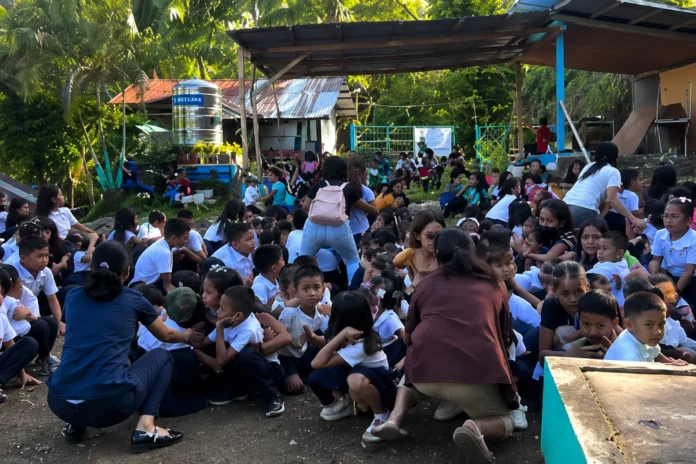
One widely shared Facebook video showed grade school students crying beneath swaying roadside trees. Children sat together across school grounds while teachers repeatedly instructed them toward calmness. A nearby tin roof structure suddenly collapsed loudly beside frightened students during continuing tremors. Several children instinctively attempted escape before teachers urged them back toward safer gathering areas.
Meanwhile, teachers appeared determined preventing dangerous stampedes during emotionally overwhelming moments across affected schools. Students either remained seated or stood motionless outside vulnerable classroom buildings after evacuation. Some children covered their heads with shaking hands while teachers issued urgent instructions nearby.
At Mahayahay elementary school, educators later confirmed the earthquake caused no student injuries afterward. School officials credited regular disaster drills for calmer responses during terrifying moments beneath shaking ground. Administrators later described the incident as proof supporting consistent earthquake preparedness education nationwide.
Elsewhere, education officials acknowledged emotional trauma continued affecting many children after the devastating earthquake. Several students reportedly remained fearful despite successful evacuations from dangerous school structures during tremors. Repeated earthquake drills nevertheless appeared helpful during one of Philippines’ strongest seismic disasters.
Years of Preparation Helped Prevent Greater Disaster
Meanwhile, disaster officials credited preparedness programs for significantly reducing casualties throughout southern Philippines afterward. Authorities said regular earthquake drills helped communities react faster during terrifying moments nationwide. Officials also believed preparedness education prevented deadly stampedes across crowded schools and public spaces.
Teresito Bacolcol from the national volcanology agency praised years of public earthquake education. He explained preparedness campaigns helped residents anticipate dangerous situations during Monday morning’s destructive earthquake. Bacolcol also noted fortunate timing because classes and office work had not fully started.
Additionally, regional disaster officials described extensive training efforts implemented across schools before the earthquake. School principals reportedly completed incident management courses before appointing teacher disaster response teams afterward. Those teams received preparation regarding earthquake response, tsunami risks, evacuation procedures, and emergency coordination. Officials later emphasized repeated preparedness lessons encouraged disciplined responses despite overwhelming fear during tremors.
Nevertheless, authorities expressed concern regarding structural collapses across several damaged communities after the earthquake. Bacolcol questioned whether some destroyed buildings actually followed national construction safety requirements properly. The disaster exposed continuing weaknesses despite years of preparedness improvements across vulnerable Philippine regions.
Aftershocks Continue Testing Philippine Resilience
Afterward, continuing aftershocks reminded survivors that danger still threatened vulnerable southern Philippine communities nationwide. Many displaced residents remained fearful because repeated tremors renewed concerns about collapsing structures afterward. Emotional trauma also continued affecting families already devastated by widespread destruction and heartbreaking losses.
Likewise, the earthquake exposed both strengths and weaknesses within Philippine disaster response systems nationwide. Years of preparedness education clearly helped communities respond faster during terrifying earthquake emergencies afterward. However, damaged buildings also raised serious questions regarding safety enforcement and construction accountability. Unsafe infrastructure remains dangerous throughout earthquake prone regions despite decades of public disaster awareness.
Ultimately, communities across the Pacific Ring of Fire continue facing unpredictable seismic threats regularly. The devastating earthquake demonstrated preparedness education saves lives during catastrophic natural disasters nationwide. Nevertheless, future resilience depends upon stronger infrastructure, consistent planning, and continued public cooperation.

CALAMITY360.com delivers global news and safety insights on earthquakes, tsunamis, volcanic eruptions, floods, wildfires, storms, and tornadoes. It provides timely updates, expert tips, and disaster-readiness information to foster awareness, preparedness, and resilience across communities worldwide.