
When Fire Meets Ice Across the Solar System
Volcanoes have fascinated humans for centuries because they demonstrate nature’s raw power and unpredictability. Beyond Earth, these fiery mountains reveal how planetary processes shape landscapes. Studying volcanoes on other worlds helps scientists understand planetary formation and evolution.
The solar system hosts a variety of volcanic activity, from molten lava on Mars to icy eruptions on distant moons. Each planet or moon has its unique conditions that influence how volcanoes form and behave. Some worlds have volcanoes taller than mountains on Earth, while others emit strange cryogenic materials. These extremes highlight the diversity of geological activity across planets and moons.
Scientists study extraterrestrial volcanoes using spacecraft, telescopes, and advanced imaging techniques to collect data remotely. Comparing these volcanoes with Earth’s helps reveal the internal heat sources that drive eruptions. Observations show that some moons experience continuous volcanic activity due to tidal heating, while other planets retain long-dormant features. Understanding these differences provides insight into each world’s history and potential for future exploration.
Exploring the most prominent volcano on every planet offers a unique perspective on our solar system. It allows us to appreciate both familiar and exotic landscapes shaped by fire and ice. By studying these volcanic giants, we connect geological processes across worlds and deepen our understanding of planetary science. These volcanic wonders show how diverse and dynamic our cosmic neighborhood truly is.
1. Mercury Reveals Its Hidden Volcanic Landscapes
Following the exploration of volcanic wonders across the solar system, Mercury presents a unique case with ancient volcanic features. Its surface bears evidence of widespread lava plains and towering formations such as Caloris Montes. These formations suggest that Mercury experienced intense volcanic activity early in its history.
Caloris Montes rises dramatically around the massive Caloris Basin, showing the immense force of ancient eruptions. The basin itself formed from a colossal impact, which likely triggered volcanic flows around its edges. Lava flooding and tectonic stresses reshaped the surrounding terrain over millions of years. Mercury’s volcanic plains are smoother than most planetary surfaces due to these extensive lava deposits.
Evidence of Mercury’s volcanic past comes from both spacecraft observations and detailed surface imaging. Mariner 10 and MESSENGER missions revealed large shields and ridges indicative of volcanic activity. These missions detected irregular plains with volcanic vents that suggest long-lasting eruptions. The distribution of volcanic materials hints at complex interactions between impacts and internal heat sources.
Mercury’s proximity to the Sun subjects it to extreme temperatures, influencing how volcanic materials behave on its surface. Daytime temperatures can exceed eight hundred degrees Fahrenheit, while nighttime drops near minus three hundred degrees. Such extremes likely caused volcanic materials to cool rapidly, affecting flow patterns and surface textures. This temperature variation contributes to Mercury’s unique geological appearance compared to other terrestrial planets.
The planet’s thin exosphere prevents volcanic gases from accumulating, leaving behind mostly solid lava formations. Scientists believe that most volcanic activity on Mercury ceased billions of years ago. Despite inactivity, the surface retains clear markers of its fiery past. Comparing Mercury’s volcanoes with those on Venus and Mars highlights how environmental conditions shape volcanic behavior differently.
Mercury’s ancient eruptions shaped craters and plains, influencing later tectonic activity across the planet. Wrinkle ridges and scarps intersect volcanic regions, showing ongoing planetary contraction. These features reveal the interplay between internal cooling and surface deformation. They provide important clues about Mercury’s geological evolution and internal composition.
Studying Mercury’s volcanoes helps scientists understand how small, hot planets retain heat and produce eruptions. It also provides context for interpreting surface features on similar terrestrial bodies in the inner solar system. By examining lava flows and volcanic structures, researchers can model how Mercury cooled and evolved over billions of years. This knowledge bridges observations from Earth to the extreme conditions of the innermost planet.
Mercury’s hidden volcanic landscapes illustrate the diversity of planetary volcanism and its dependence on local conditions. From towering mountains to smooth lava plains, these features demonstrate how volcanism can reshape an entire world. The planet’s extremes in temperature, surface composition, and impact history created a volcanic record unlike any other in the solar system. Studying Mercury allows scientists to connect the fiery past of inner planets with the broader story of planetary formation.
2. Venus Boils With Towering Volcanic Peaks
Building on Mercury’s volcanic history, Venus presents a dramatically different environment with immense volcanic structures shaped by extreme atmospheric conditions. Maat Mons stands as the planet’s most prominent volcano, towering over the surrounding plains. Its sheer size and prominence make it a key subject for understanding Venusian volcanism.
Maat Mons rises approximately eight kilometers above the surrounding terrain and spans more than 400 kilometers across its base. Radar mapping from spacecraft like Magellan revealed its massive slopes and layered lava flows. The volcano’s structure suggests multiple eruptive phases over millions of years. Scientists study these layers to reconstruct Venus’ volcanic history and surface evolution.
Volcanic activity on Venus is influenced heavily by its dense carbon dioxide atmosphere, which traps heat efficiently. Surface temperatures average around 870 degrees Fahrenheit, creating an environment unlike any on Earth. Lava flows move slowly, allowing chemical interactions with the thick atmosphere. This results in unique surface formations that differ significantly from terrestrial volcanoes.
Evidence indicates that Maat Mons may have experienced recent eruptions, though direct confirmation remains challenging. Radar imaging shows signs of surface deformation and potential lava flows younger than surrounding plains. Volcanic activity is likely episodic, influenced by internal pressure and mantle convection. The combination of high temperatures and thick atmosphere creates conditions for unusual eruptive styles.
Compared to Mercury, Venus’ volcanoes display more fluid lava structures due to the combination of heat and surface pressure. The planet’s tectonic activity is minimal, so most relief is built by volcanic accumulation. Lava plains extend for hundreds of kilometers, showing how eruptions reshape large areas. Maat Mons exemplifies how Venus’ volcanism produces towering yet widespread volcanic landscapes.
Studying Maat Mons helps scientists understand how volcanism operates under extreme pressure and heat conditions. Insights gained provide clues about the planet’s internal dynamics and mantle composition. Comparing Venusian volcanoes to those on Mercury and Earth highlights how atmospheric conditions shape eruptive behavior. These differences illuminate the diversity of volcanic processes across terrestrial planets.
Venus’ towering volcanic peaks showcase a world where fire meets crushing heat and atmospheric pressure. Maat Mons remains a testament to persistent planetary volcanism and offers a stark contrast to Earth’s volcanoes. Its vast lava flows, massive height, and eruptive history reveal the dramatic ways planets evolve. Exploring Venus’ volcanism deepens our understanding of extreme planetary environments and geological processes beyond Earth.
3. Earth Shows Nature’s Fiery Masterpieces
Following Venus’ extreme volcanic environment, Earth presents volcanism in a more familiar yet equally powerful form. Mauna Loa and Mount Vesuvius exemplify iconic volcanoes that have shaped both landscapes and human history. These volcanoes provide crucial benchmarks for comparing geological activity across planets.
Mauna Loa in Hawaii covers an area larger than most cities and rises over 13,000 feet above sea level. Its frequent eruptions produce vast lava flows that reshape the island’s surface over decades. Scientists monitor Mauna Loa carefully to predict future eruptions and mitigate potential hazards. Continuous observation provides valuable data on magma movement and eruption patterns beneath Earth’s surface.
Mount Vesuvius, infamous for its eruption in AD 79, illustrates the destructive potential of volcanic activity near populated regions. Pyroclastic flows and ash clouds buried the city of Pompeii, leaving a permanent mark on history. Vesuvius’ eruptions are explosive, unlike the relatively gentle flows of Mauna Loa. Studying these contrasting eruption types helps scientists understand varying volcanic behaviors worldwide.
Earth’s tectonic plates drive volcanism through subduction, rifting, and hotspot activity, providing a dynamic system for eruptions. Volcanoes influence climate, ecosystems, and human societies through both immediate and long-term effects. Ash clouds can alter weather patterns temporarily while lava flows create fertile soils over time. These interactions illustrate how volcanism connects geological processes to life on Earth.
Earth’s volcanoes act as natural laboratories for understanding planetary volcanism beyond our world. Their accessible locations allow detailed observation, sampling, and modeling that cannot be replicated on other planets. Comparing Earth’s volcanoes with Mercury, Venus, and Mars highlights differences in size, eruption style, and environmental influence. The knowledge gained informs planetary science and improves our understanding of extraterrestrial volcanism.
Volcanism on Earth demonstrates a balance of destructive force and creative power, shaping continents and landscapes over millennia. Its variety, from shield volcanoes to stratovolcanoes, provides examples for studying both lava flows and explosive eruptions. Earth’s dynamic environment makes its volcanoes essential references for understanding how internal heat drives surface activity elsewhere. These fiery masterpieces reveal the planet’s vitality and geological complexity.
By examining Earth’s volcanoes, scientists establish a foundation for interpreting volcanic processes across the solar system. Mauna Loa and Vesuvius showcase both slow-building and sudden eruptions, highlighting diverse eruption mechanisms. They serve as models for comparing planetary volcanism and for understanding how different environments influence volcanic development. Earth’s volcanoes remain central to connecting terrestrial knowledge with the mysteries of other worlds.
4. Mars Stands Tall With Olympus Mons
Building on Earth’s diverse volcanism, Mars presents a colossal example in Olympus Mons, the tallest volcano in the solar system. Rising dramatically above the Martian plains, it dominates the landscape with unmatched scale. Its immense size captures the attention of scientists and space enthusiasts alike.
Olympus Mons measures approximately twenty-two kilometers in height, nearly three times taller than Mount Everest. Its base spans around six hundred kilometers, making it comparable in area to the state of Arizona. The volcano’s enormous dimensions suggest prolonged volcanic activity over hundreds of millions of years. These features provide crucial insight into the internal heat and mantle dynamics of Mars.
The volcano’s caldera is a complex series of overlapping craters formed from repeated eruptions. Lava flows radiate outward for hundreds of kilometers, indicating that Mars’ low surface gravity allowed extensive spreading. The relatively gentle slopes are characteristic of shield volcanoes, similar to those found on Earth. Studying these structures helps scientists understand eruption styles under different planetary conditions.
Olympus Mons’ age is estimated between two and three billion years, revealing that volcanic activity on Mars persisted long after the planet’s formation. Its preservation suggests a lack of tectonic plate movement, which allowed the volcano to grow uninterrupted. The absence of significant erosion further exposes its original volcanic features. Comparing Olympus Mons with Earth’s volcanoes emphasizes the role of planetary size and tectonics in shaping volcanic growth.
Evidence of past lava flows indicates that Olympus Mons experienced multiple eruptive phases, producing layers of basaltic rock. These flows vary in thickness and extent, creating a stratified structure within the volcano. Martian volcanism appears less explosive than on Earth, favoring fluid lava that spreads widely. Understanding the flow patterns aids in reconstructing the volcano’s eruptive history and internal processes.
Scientists study Olympus Mons using orbital imagery and topographical data from missions such as Mars Global Surveyor. These observations reveal subtle features like collapsed lava tubes and vent structures. Such details provide clues about magma composition, eruption frequency, and potential volcanic hazards. Research on Mars’ largest volcano informs broader theories of planetary volcanology and heat retention.
The sheer scale of Olympus Mons highlights how environmental factors, including gravity and atmospheric pressure, influence volcanic development. Its preserved structure offers a record of billions of years of volcanic activity. The volcano exemplifies how Martian conditions allowed features far larger than those possible on Earth. Studying Olympus Mons connects the history of Mars’ surface with broader solar system processes.
Olympus Mons demonstrates that volcanism is a dominant force capable of reshaping planetary landscapes on an unprecedented scale. Its immense height, area, and well-preserved lava flows reveal the long-lasting effects of Martian internal heat. By examining this giant volcano, scientists gain insight into how planets evolve and how environmental conditions shape volcanic processes. Olympus Mons remains a symbol of the extraordinary geological diversity present across the solar system.
5. Jupiter Exhibits Moon Volcanoes Stealing the Spotlight
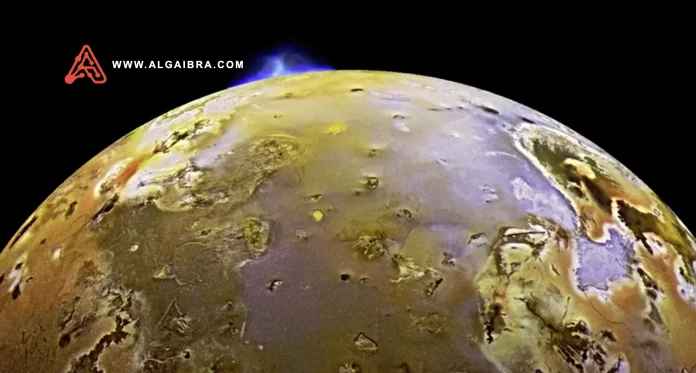
Following Mars’ towering Olympus Mons, Jupiter demonstrates a different volcanic story through its moons, as the planet itself lacks a solid surface. Io, the innermost of the Galilean moons, is the most volcanically active body in the solar system. Its dramatic eruptions provide a striking example of how tidal forces drive geological activity.
Loki Patera, Io’s most famous volcano, spans approximately two hundred kilometers and contains a large lava lake. The volcano undergoes frequent resurfacing due to continuous eruptions and lava movement. Its activity is so intense that it releases heat exceeding that of all other moons combined. Scientists study Loki Patera to understand extreme volcanism in environments unlike any found on Earth.
Io’s intense volcanism is powered by tidal heating, a result of gravitational interactions with Jupiter and neighboring moons. These forces stretch and flex Io’s interior, generating heat that melts rock into magma. The constant flexing maintains a molten interior, fueling persistent volcanic activity. This unique energy source differentiates Io’s eruptions from volcanism driven solely by internal radioactive decay.
Eruptions on Loki Patera can reach hundreds of kilometers in height, propelling sulfur and silicate materials into space. The lava flows cover vast areas, creating layered plains and volcanic paterae across the moon’s surface. Io’s volcanic output is continuous, producing visible changes within months. Observations from spacecraft like Galileo have provided detailed imagery of these dynamic eruptions.
The surface of Io is covered with colorful deposits of sulfur compounds from volcanic activity, creating a vivid landscape. Lava lakes and active vents constantly reshape the terrain, leaving few regions untouched by volcanic processes. These conditions make Io a natural laboratory for studying extreme volcanism under low-gravity conditions. Researchers gain insight into how planetary bodies respond to intense tidal forces.
Studying Io’s volcanoes helps scientists compare terrestrial and extraterrestrial volcanic processes and understand heat distribution in celestial bodies. Loki Patera exemplifies the scale and intensity of eruptions that tidal heating can produce. The moon’s volcanic activity informs theories on geological evolution and internal dynamics across different planetary environments. These findings illustrate how moons can rival planets in geological complexity.
Io’s volcanic spectacle demonstrates that moons can host extreme eruptions rivaling planetary volcanoes in size and energy. Loki Patera and surrounding volcanic features highlight the role of gravitational forces in shaping geological activity. By observing Io, scientists gain a deeper understanding of volcanic mechanisms beyond Earth and Mars. The moon’s relentless volcanic activity continues to captivate researchers and reveal the solar system’s extraordinary diversity.
6. Saturn Highlights Cryovolcanism on Titan
Following Io’s extreme volcanism, Saturn’s moon Titan presents a frozen landscape where cryovolcanism shapes the surface in unusual ways. Doom Mons stands as Titan’s most prominent cryovolcano, rising hundreds of meters above the surrounding plains. Unlike traditional lava, Titan’s eruptions release water, ammonia, and methane mixtures onto its icy crust.
Cryovolcanism on Titan occurs when internal heat melts subsurface ice, creating a slurry of water and volatiles. This mixture is expelled through vents, forming domes, ridges, and smooth plains across the moon. Doom Mons displays these features prominently, showing evidence of repeated eruptive activity over time. These processes suggest Titan retains enough internal heat to sustain episodic volcanic activity.
Methane plays a crucial role in Titan’s cryovolcanic system, acting as both a fluid and volatile agent. Eruptions can release methane into the atmosphere, contributing to the moon’s thick, orange haze. Lava-like flows of icy slurries cover extensive areas, reshaping the surface gradually. Scientists study these flows to understand how volatile compounds influence cryovolcanic eruptions.
Observations from Cassini-Huygens reveal surface features consistent with active or recent cryovolcanism, including channels and domes around Doom Mons. Some flows appear younger than surrounding terrain, suggesting ongoing geological processes. Titan’s low gravity allows cryolava to travel far from eruptive vents. This behavior highlights how planetary conditions affect volcanic morphology and flow patterns.
Titan’s surface contains multiple candidate cryovolcanoes, but Doom Mons remains the most prominent and studied example. Its size, structure, and potential activity provide valuable clues about the moon’s internal composition. The cryovolcano demonstrates how water, ammonia, and methane can substitute for silicate magma. Comparing Doom Mons to terrestrial volcanoes emphasizes the differences between icy and rocky planetary eruptions.
Studying Titan’s cryovolcanism helps scientists understand volcanic processes in cold environments throughout the solar system. Doom Mons offers insight into the role of internal heating and volatile content in shaping icy landscapes. These findings inform theories about similar processes on moons like Enceladus or Triton. Titan illustrates that volcanism extends beyond molten rock, operating effectively in frozen worlds.
Titan’s icy volcanoes reveal a moon alive with geological activity despite frigid surface conditions. Doom Mons exemplifies how cryovolcanism reshapes the landscape and influences the atmosphere through volatile release. By examining these features, scientists gain a deeper understanding of frozen volcanic systems across the solar system. Titan stands as a testament to the diversity and adaptability of volcanic processes beyond Earth.
7. Uranus Brings the Coldest Cryovolcanoes on Ariel or Miranda
Continuing from Titan’s icy activity, Uranus’ moons Ariel and Miranda showcase some of the coldest cryovolcanism in the solar system. These moons display surface features formed by eruptions of water and volatile compounds. Cryovolcanism on Ariel and Miranda demonstrates that geological activity can occur even under extreme cold conditions.
Ariel exhibits extensive canyons, ridges, and smooth plains indicative of past cryovolcanic flows. Internal heat from radioactive decay likely melts subsurface ice, producing slurries that erupt onto the surface. These icy flows create layered terrains that reveal multiple eruptive episodes over time. Scientists study these patterns to reconstruct the moons’ geological history and internal processes.
Miranda, though smaller, presents some of the most dramatic surface features in the solar system. Its coronae, large tectonic regions, may have been formed by cryovolcanic activity combined with surface fractures. Eruptions on Miranda likely involved water-ammonia mixtures reaching the surface through deep cracks. The resulting formations give the moon a patchwork appearance unlike any other.
Cryovolcanism on these moons occurs despite extremely low temperatures, often below minus three hundred degrees Fahrenheit. This indicates that internal heat sources are sufficient to melt subsurface ice intermittently. Erupted materials may refreeze quickly, forming ridges, domes, and smooth plains. Observing these features helps scientists understand how cold environments influence volcanic behavior.
Ariel’s icy volcanoes include both domes and channels suggesting varied eruption styles over time. Some flows appear younger than surrounding terrain, indicating episodic volcanic activity. The combination of cryovolcanism and tectonic processes creates complex landscapes. Mapping these features provides insight into the internal structure and heat distribution of the moons.
Miranda’s coronae and ridged regions reveal how cryovolcanic activity interacts with surface stresses. Eruptions may occur along fractures where internal pressure forces volatile-rich slurries upward. These processes produce unique surface morphologies rarely seen elsewhere in the solar system. The study of Miranda highlights how even small moons can retain sufficient heat for geological activity.
Examining cryovolcanism on Ariel and Miranda helps scientists compare icy eruptions across the outer solar system. These moons provide analogs for understanding similar features on Neptune’s Triton or Saturn’s Enceladus. Insights from Uranus’ moons contribute to broader models of internal heating and volatile transport. Cryovolcanism demonstrates the persistence of geological activity far from the Sun.
Uranus’ coldest cryovolcanoes reveal that even distant moons can experience dramatic geological processes. Ariel and Miranda showcase the power of internal heat shaping icy landscapes under extreme conditions. Their domes, channels, and coronae provide a window into the unique volcanic activity of the outer solar system. Studying these moons expands our understanding of how planets and their satellites evolve over time.
8. Neptune Offers Nitrogen Geysers on Triton
Following Uranus’ icy moons, Neptune’s Triton demonstrates active cryovolcanism in one of the coldest environments in the solar system. The moon displays nitrogen geysers that erupt through its frozen surface. These eruptions reveal that internal heat persists despite Triton’s extreme distance from the Sun.
Triton’s geysers eject nitrogen gas and dark particles hundreds of kilometers into the thin atmosphere. The eruptions appear seasonal, triggered by sunlight warming the surface and sublimating nitrogen ice. The resulting plumes darken portions of the moon’s terrain as particles settle back down. Observing these features allows scientists to study cryovolcanic mechanisms under extreme cold conditions.
Cryovolcanic activity on Triton is driven by heat from radioactive decay and residual internal energy. This internal heat melts subsurface ices, creating pressurized pockets that escape through cracks in the crust. The eruptions provide direct evidence that even distant, small moons can retain significant internal heat. Nitrogen geysers highlight how volatile compounds shape planetary surfaces far from the Sun.
The surface of Triton shows smooth plains, pits, and streaks formed by repeated geyser activity. Some regions appear younger than surrounding terrain, suggesting ongoing geological processes. Cryovolcanic deposits create a patchwork of bright and dark areas across the moon. These formations help scientists understand both eruption styles and material transport on icy worlds.
Triton’s volcanic activity differs from warmer moons, relying on sublimation and gas pressure rather than molten rock or water slurries. The cold environment affects flow patterns and plume heights, producing distinctive surface features. Observations from Voyager 2 provided the first detailed images of these geysers and their impact. Scientists continue to analyze these data to infer subsurface structure and composition.
The nitrogen geysers indicate that Triton’s crust is thin enough in areas to allow pressurized volatiles to escape. This contrasts with other icy moons where thicker crusts may trap internal heat longer. Surface patterns created by eruptions record the moon’s geological history over millions of years. Studying these patterns enhances understanding of cryovolcanism in extreme environments.
Triton’s cryovolcanoes illustrate how internal heat can persist even on distant, icy bodies. Eruptions reshape the surface, transport material, and provide insight into the moon’s internal dynamics. Comparing Triton to Uranus’ moons and Titan shows variations in cryovolcanic processes across the outer solar system. These observations deepen knowledge of planetary geology in frozen worlds.
Neptune’s nitrogen geysers on Triton highlight the persistence of geological activity far from the Sun. Cryovolcanic eruptions demonstrate how internal energy can drive surface changes under extreme cold conditions. Studying Triton helps scientists understand volcanic processes in icy moons and informs models for other distant celestial bodies. Triton’s activity emphasizes the diversity and adaptability of volcanism across the solar system.
9. Pluto Holds Surprising Ice Volcanoes
Following Triton’s active nitrogen geysers, Pluto demonstrates that even small dwarf planets can host volcanic activity. Wright Mons stands as Pluto’s most prominent cryovolcano, rising above the icy plains. Observations from New Horizons revealed unexpected evidence of internal heat driving eruptions on this distant world.
Wright Mons measures approximately thirteen kilometers in height and spans roughly one hundred fifty kilometers across its base. Its slopes and summit caldera indicate past eruptions of icy material rather than molten rock. The volcano’s layered structure suggests multiple episodes of cryovolcanic activity over geological time. These features challenge previous assumptions about Pluto’s thermal and geological inactivity.
Cryovolcanism on Pluto involves the eruption of water, nitrogen, and methane ices, forming domes and plains. Ejected materials refreeze quickly due to extreme surface temperatures, preserving delicate surface features. The resulting structures resemble terrestrial shield volcanoes but are composed of frozen volatiles. Studying these formations provides insight into how internal heat can persist on small, distant bodies.
New Horizons captured images showing smooth plains surrounding Wright Mons, suggesting resurfacing from cryovolcanic flows. Some areas appear younger than the surrounding terrain, indicating relatively recent activity. This implies that Pluto’s interior remains warm enough to mobilize subsurface ices. Surface patterns also reveal fractures and faults associated with volcanic processes.
Pluto’s cryovolcanoes indicate that radioactive decay and residual heat may be sufficient to drive geological activity. The volcanoes reshape the surface, transporting icy materials across vast distances. Comparisons with other icy bodies, such as Triton and Titan, highlight the diversity of cryovolcanism in the outer solar system. Understanding these processes helps scientists model thermal evolution for small planetary bodies.
Wright Mons’ features suggest that eruptions may have occurred as discrete events rather than continuous flows. Evidence of caldera collapses and flow channels provides clues about eruption mechanisms and subsurface reservoirs. These observations demonstrate that even distant, cold worlds can exhibit dynamic geological activity. Pluto challenges prior expectations of small bodies being geologically inert.
Studying Pluto’s cryovolcanism deepens understanding of how internal heat drives surface changes on icy planets and moons. Wright Mons provides a rare opportunity to observe volcanic processes far from the Sun. Insights gained from Pluto inform models for other dwarf planets and Kuiper Belt objects. These findings show that planetary size does not strictly limit the presence of volcanism.
Pluto’s surprising ice volcanoes reveal that even the smallest planets can harbor internal energy shaping their surfaces. Wright Mons exemplifies the persistence of geological activity under extreme cold and isolation. By examining Pluto, scientists gain a broader perspective on cryovolcanism across the solar system. These icy giants demonstrate that volcanism thrives in a variety of unexpected planetary environments.
Volcanoes Connect Worlds and Reveal Cosmic Secrets
Exploring volcanoes from Mercury to Pluto demonstrates the incredible diversity of geological activity across the solar system. Each planet and moon exhibits unique eruption styles shaped by gravity, composition, and internal heat. Studying these volcanoes provides insight into the processes that have shaped planetary surfaces over billions of years.
From towering Olympus Mons on Mars to icy Wright Mons on Pluto, eruptions vary widely in scale and material. Some release molten rock, while others emit volatile ices or nitrogen plumes into thin atmospheres. The resulting formations reveal information about each world’s internal structure, heat distribution, and geological evolution. Comparing these features highlights how environmental conditions govern volcanic behavior across different celestial bodies.
Volcanic activity informs scientists about planetary formation, thermal history, and tectonic dynamics in both rocky and icy worlds. Moon-based volcanoes like Loki Patera on Io demonstrate how gravitational interactions can generate internal heat and drive eruptions. Cryovolcanoes on Titan, Triton, and Uranus’ moons show that volcanism extends to frigid environments far from the Sun. Collectively, these observations help construct models of planetary evolution throughout the solar system.
Studying volcanoes across the solar system connects Earth’s geological activity with the broader cosmos and deepens understanding of universal processes. Insights gained inform planetary science, guide exploration, and reveal the hidden forces shaping worlds beyond our own. By comparing rocky, icy, and moon-based volcanoes, scientists uncover patterns that link planetary interiors with surface features. Volcanoes thus act as cosmic storytellers, revealing the dynamic nature of our solar neighborhood.

CALAMITY360.com delivers global news and safety insights on earthquakes, tsunamis, volcanic eruptions, floods, wildfires, storms, and tornadoes. It provides timely updates, expert tips, and disaster-readiness information to foster awareness, preparedness, and resilience across communities worldwide.