
The Weight Beneath Southern California’s Quiet Ground
Deep tectonic stress now builds beneath heavily populated areas throughout Southern California. Scientists recently identified historically elevated strain levels across the San Andreas Fault system. Researchers emphasized current seismic conditions without claims regarding immediate earthquake occurrence.
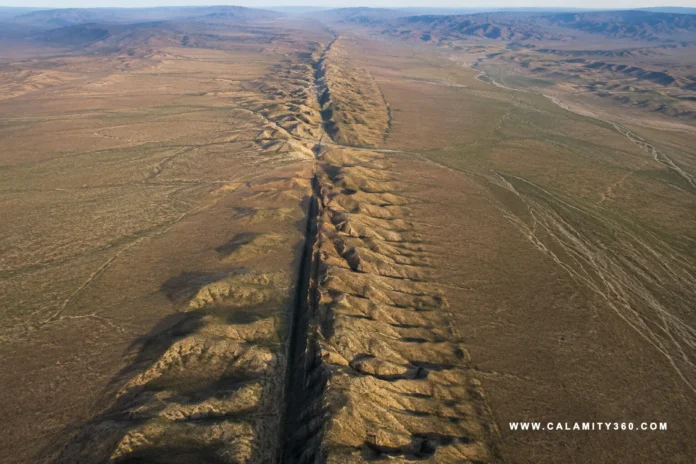
Meanwhile, researchers from the University of Hawaiʻi at Mānoa issued alarming regional findings. Their study identified severe stress accumulation beneath the San Andreas and San Jacinto faults. Both fault systems extend dangerously close toward crowded communities across inland Southern California.
Scientists described the interconnected fault network as critically loaded after prolonged tectonic pressure. More than 160 years passed since the region experienced its last major rupture. Researchers warned stress now spans multiple linked fault segments beneath Southern California communities. This pattern raises concern regarding larger earthquakes involving several connected fault systems simultaneously.
Cajon Pass May Decide California’s Seismic Fate
Consequently, scientists now focus intensely upon the strategically important Cajon Pass region. This junction connects the San Andreas Fault and San Jacinto Fault systems directly. Researchers believe this area may determine whether future ruptures remain isolated or connected.
The University of Hawaiʻi study described Cajon Pass as a possible earthquake gate. Scientists explained ruptures could either stop there or continue across neighboring fault systems. Such linked movement could unleash stronger earthquakes across heavily populated Southern California regions.
Moreover, researchers identified dangerously elevated stress throughout several interconnected fault segments recently. Lead author Liliane Burkhard described regional stress levels as historically extreme after prolonged inactivity. Scientists noted more than 160 years elapsed since Southern California experienced substantial regional rupture. This lengthy seismic silence allowed immense tectonic pressure accumulation beneath densely populated communities statewide.
Scientists fear linked ruptures may create broader destruction than isolated seismic events traditionally. Stronger earthquakes could affect infrastructure networks spanning Los Angeles, Riverside, and San Bernardino counties. Transportation systems, pipelines, communication lines, and electrical networks face heightened regional vulnerability.
Accordingly, experts continue close observation across Southern California’s interconnected tectonic fault systems today. Researchers emphasized no evidence currently suggests an imminent catastrophic earthquake throughout California. However, scientists warned critically loaded faults deserve careful monitoring because consequences could become enormous.
Why the San Andreas Fault Cannot Split California
Nevertheless, many Americans still believe California could eventually fall into the Pacific Ocean. Scientists repeatedly rejected this dramatic scenario because regional tectonic mechanics differ substantially. The San Andreas Fault operates through horizontal movement rather than destructive continental separation.
The fault represents a strike slip boundary between massive tectonic plates beneath California. Here, the Pacific Plate and North American Plate gradually slide beside one another. This sideways movement differs completely from geological environments where continents slowly break apart.
Unlike spreading boundaries elsewhere worldwide, California’s crust does not pull apart vertically today. Scientists instead observe lateral displacement along extensive fault systems beneath Southern California communities. Even powerful earthquakes produce horizontal offsets rather than catastrophic continental collapse into nearby oceans.
Furthermore, geologists compared California’s tectonic environment with the East African Rift recently. That African region slowly separates into distinct tectonic plates through spreading continental crust. The San Andreas system functions differently because plates slide sideways across shared crustal boundaries. Consequently, California remains firmly attached despite continuous tectonic movement beneath surrounding regions.
Researchers estimate regional tectonic plates shift roughly forty five millimeters annually beneath California. This movement roughly matches the average yearly growth rate of human fingernails. Over centuries, accumulated motion gradually reshapes coastlines, mountains, valleys, and regional fault systems.
Meanwhile, geological models suggest Los Angeles and San Francisco could eventually approach closer proximity. Scientists explained millions of years remain necessary before substantial geographic shifts become clearly visible. California therefore faces continuous reshaping rather than sudden continental separation from North America.
Surface Rupture Could Reshape Cities Within Seconds
Accordingly, scientists warn surface rupture could permanently deform Southern California landscapes during earthquakes. Fault movement deep underground sometimes breaks directly through streets, neighborhoods, and transportation corridors. This violent displacement can instantly offset roads, railways, pipelines, and major utility systems.
During major earthquakes, severe shaking could continue longer than one exhausting minute statewide. Communities nearest active faults would likely experience the strongest destructive seismic forces immediately. Engineers warned vulnerable buildings near fault traces face heightened collapse risks during powerful ruptures.
Additionally, soft soils throughout Southern California may significantly amplify dangerous earthquake shaking levels. Water saturated ground could also trigger liquefaction beneath homes, highways, and commercial districts. Liquefaction weakens soil stability and causes structures above ground to tilt or collapse.
Scientists explained strike slip faults usually create substantial horizontal displacement across affected surface regions. However, some earthquakes also produce combined movement patterns involving horizontal and vertical deformation. Such violent crustal motion can severely damage infrastructure crossing active fault boundaries directly. Urban density throughout Southern California further increases potential economic losses and emergency response challenges.
Meanwhile, many earthquakes never produce visible surface rupture despite powerful underground seismic activity afterward. Scientists noted some faults remain buried deeply beneath Earth’s crust during rupture events. Nevertheless, infrastructure near active faults still faces enormous danger from prolonged intense shaking.
California Lives With Pressure Beneath Every Generation
Ultimately, California’s history remains deeply connected with persistent seismic pressure beneath its landscape. Generations across the state experienced destructive earthquakes that permanently reshaped communities and infrastructure. Scientists expect future earthquakes because tectonic plates continue constant movement beneath Southern California. However, experts emphasized modern science still cannot accurately predict exact earthquake timing beforehand.
Meanwhile, public safety officials continue expansion efforts involving earthquake preparedness and warning technology statewide. California’s Earthquake Early Warning system now delivers rapid alerts through multiple communication channels. Even brief warnings provide crucial seconds for protective actions before severe shaking arrives.
Residents throughout Southern California therefore face constant reminders regarding unavoidable regional seismic realities today. Scientists urged continued preparedness because critically stressed faults remain dangerous despite uncertain earthquake timelines. Public awareness, resilient infrastructure, and emergency planning now represent California’s strongest defenses against catastrophe.

CALAMITY360.com delivers global news and safety insights on earthquakes, tsunamis, volcanic eruptions, floods, wildfires, storms, and tornadoes. It provides timely updates, expert tips, and disaster-readiness information to foster awareness, preparedness, and resilience across communities worldwide.