
A Sudden Rupture Leaves Communities Under Strain
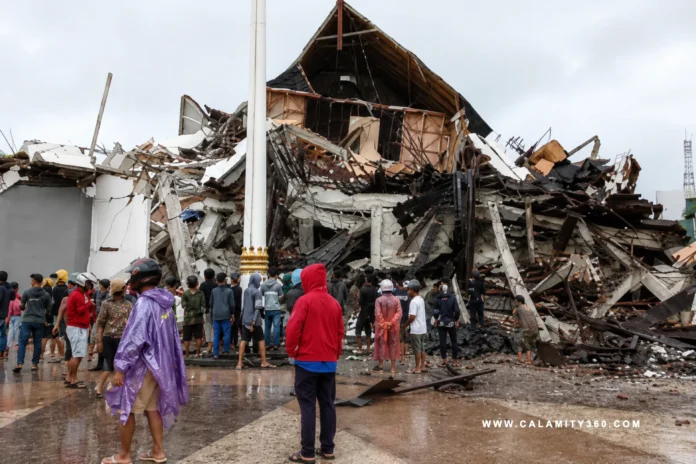
A powerful 6.7 magnitude earthquake struck Central Sulawesi province on Tuesday. The tectonic event occurred at 11:27 a.m. local time. Authorities reported rising casualties as assessments continued across affected areas. Communities faced immediate challenges after strong ground shaking struck suddenly.
Updated figures showed the death toll increased to three people. Seventeen individuals suffered serious injuries from the earthquake’s impacts. Another ninety one people sustained minor injuries across affected communities. Disaster officials said 6,412 residents experienced consequences from the event.
The earthquake’s epicenter lay about forty two kilometers southeast of Palu. Seismic data placed the source at a depth of ten kilometers. Authorities confirmed the earthquake occurred on land within Central Sulawesi. Despite its strength, the event did not trigger a tsunami.
Sigi Regency Bears the Heaviest Burden of Destruction
Sigi regency emerged as the area most affected by Tuesday’s earthquake. Authorities reported damage across several villages within the regency’s boundaries. The concentration of impacts placed extraordinary pressure on local communities.
Damage reports highlighted the broad reach of destruction across populated areas. Homes and community spaces faced consequences from the powerful ground movement. Residents confronted uncertainty as assessments continued throughout affected villages. Recovery needs grew as officials documented conditions across multiple locations.
The earthquake affected 2,012 households, most within Sigi regency. Thousands of residents experienced disruptions to normal daily activities. Essential routines became more difficult as communities responded to damage. Families relied on assistance while authorities evaluated local conditions.
Human losses deepened the challenges already facing affected communities. Fatalities and injuries left lasting consequences for many local families. Serious and minor injuries increased demands on available support resources.
Beyond physical damage, the disaster altered life for many residents. More than 6,400 people felt the earthquake’s direct effects. Community recovery now depends on continued assistance and careful assessment.
Emergency Status Accelerates Relief and Assessment Efforts
Government authorities moved quickly to strengthen disaster response measures. Central Sulawesi entered disaster emergency status beginning on Wednesday. Officials adopted the designation to accelerate assistance and coordination efforts. The emergency period will remain active through June 23.
The declaration supports faster action across affected communities and villages. Authorities seek to improve response efficiency after widespread earthquake impacts. Recovery priorities include assistance for residents and damage evaluation efforts.
Emergency supplies reached affected areas as humanitarian support expanded. Government assistance included tents, food packages, mattresses, and blankets. These resources aim to address immediate needs among displaced residents. Relief distribution continues as authorities identify requirements across impacted locations.
Response teams remain active throughout the province after the earthquake. Assessment operations continue as officials document damage and community needs. Relief efforts also support residents affected by losses and disruptions.
Vigilance Remains Essential Across a Restless Region
Authorities continue close observation as aftershock activity persists across Central Sulawesi. Officials have recorded at least thirteen aftershocks since Tuesday’s earthquake. Residents received warnings to avoid damaged buildings until safety inspections. Structural risks remain a concern while assessments continue throughout affected areas.
Recent seismic events elsewhere have heightened concern across the region. Earlier this month, a powerful 7.8 magnitude earthquake struck southern Philippines. The event prompted heightened awareness among emergency management agencies. Communities faced additional uncertainty because strong earthquakes often produce aftershocks.
Northern Indonesia also experienced tsunami related concerns after the Philippines quake. Minor tsunami waves appeared at several coastal monitoring stations. Authorities advised residents in affected provinces to seek higher ground. Preparedness and caution remain essential as officials continue monitoring seismic threats.

CALAMITY360.com delivers global news and safety insights on earthquakes, tsunamis, volcanic eruptions, floods, wildfires, storms, and tornadoes. It provides timely updates, expert tips, and disaster-readiness information to foster awareness, preparedness, and resilience across communities worldwide.