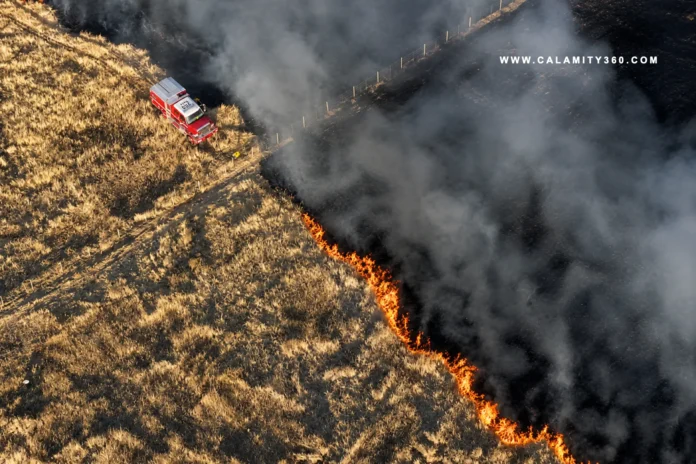

When Extreme Heat Leaves a Larger Burn Footprint
Researchers examined wildfire activity across the Western United States from 2001 through 2024. The study focused on how heat waves influenced wildfire behavior. Scientists sought to measure that relationship with greater precision than before. Their findings revealed a much stronger connection than anticipated.
Heat waves accounted for only a small share of warm season days. Researchers defined them as periods with exceptionally high temperatures. These events represented roughly twelve to fifteen percent of days. Yet forty two percent of burned area occurred during or afterward.
The results surprised researchers despite expectations of substantial wildfire impacts. A relatively limited number of extreme heat days aligned with extensive fire activity. The findings suggest heat waves warrant greater attention within wildfire research. Scientists now view this relationship as a significant driver of burned land.
Dry Air, Lightning, and Heat Create a Dangerous Formula
Heat waves influence wildfire activity through several interconnected environmental processes. Higher temperatures increase the atmosphere’s demand for available moisture. That demand accelerates moisture loss from vegetation and surrounding landscapes. Dry fuels become easier to ignite under these intensified conditions.
Vegetation responds quickly when prolonged heat removes stored moisture reserves. Dead material on the ground also loses moisture more rapidly. These changes increase the likelihood that fires can start and spread.
Nighttime conditions often provide less relief during significant heat wave events. Reduced humidity limits moisture recovery after sunset across affected regions. Fires can remain active longer because drier air persists overnight. Extended burn periods allow flames to consume more land and vegetation.
Researchers also identified increases in cloud to ground lightning activity. Heat waves can create hot and unstable atmospheric conditions. Those environments support lightning development across many Western landscapes. Some of these lightning events occur without meaningful rainfall reaching surfaces.
Dry lightning presents a particular concern for wildfire prone regions. Precipitation may evaporate before reaching the ground beneath storms. Lightning can ignite vegetation while little moisture reaches emerging flames. Elevated wildfire risk may continue after heat waves end because fuels remain unusually dry.
Forests Reveal the Strongest Link Between Heat and Fire
Long term records revealed significant changes across Western forest ecosystems. Researchers found that heat wave days nearly doubled since 2001. The increase coincided with substantial changes in wildfire activity patterns. Forests showed the clearest relationship between extreme heat and burned area.
Burned forest area increased by approximately two and one half times. Scientists compared those changes with trends in heat wave frequency. Their analysis identified a strong connection between both developments.
Researchers also estimated how much heat waves influenced cumulative losses. Without additional heat wave days since 2001, outcomes differed substantially. The study found cumulative burned forest area would have been smaller. Forest losses could have declined by approximately thirty seven percent.
Other ecosystems displayed a different response to rising temperatures. Grasslands and shrublands did not show similar long term increases. Available vegetation influenced annual burned area more strongly than heat. These findings suggest wildfire drivers vary across different landscape types.
A Hotter West Demands a New Look at Fire Forecasts
Climate change continues to influence weather patterns across the Western United States. Summers now trend hotter and drier across many regions. Researchers observed declining relative humidity during heat waves recently. Forested areas in California, Oregon, and Washington showed notable changes.
Drier heat waves appear especially effective at increasing wildfire activity. Researchers linked these conditions with greater potential for large fires. Long standing fire deficits also contribute to elevated wildfire risks. Past fire suppression practices allowed forest debris to accumulate extensively.
Wildfire forecasts already consider wind, humidity, and fuel dryness factors. Researchers argue that heat waves deserve greater attention within assessments. Their findings suggest extreme heat acts as a significant wildfire driver. Future risk evaluations may benefit from stronger consideration of heat waves.

CALAMITY360.com delivers global news and safety insights on earthquakes, tsunamis, volcanic eruptions, floods, wildfires, storms, and tornadoes. It provides timely updates, expert tips, and disaster-readiness information to foster awareness, preparedness, and resilience across communities worldwide.