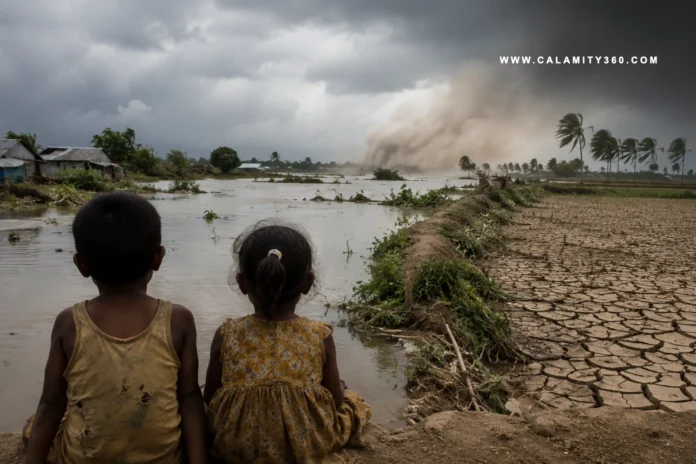

A Generation Exposed From the Very Start of Life
UNICEF’s Children’s Climate Risk Report presents a troubling picture for Bangladesh. The assessment examined children’s exposure across numerous climate related hazards. Findings show that no child grows up free from climate threats. Climate risks affect all 59 million children across the country.
The report ranks Bangladesh among the world’s most exposed countries. Only Myanmar, Pakistan, and Vietnam face worse combined exposure profiles. Researchers evaluated conditions across 186 countries through detailed analysis. Bangladesh performed poorly across several major climate hazard categories.
Multiple threats shape daily realities for children throughout the nation. Nearly nine in ten children face at least three hazards. Approximately 53 million children experience these overlapping exposures simultaneously. The scale of risk places Bangladesh among the most affected countries globally.
Where Floods, Heat, Storms and Droughts Converge
Children across Bangladesh face a wide range of climate related hazards. The report identified several threats that affect large populations. Exposure extends across both environmental and weather related dangers. Many children encounter multiple risks within the same communities.
Drought represents one of the most widespread hazards nationwide. Researchers estimate drought affects approximately 98 percent of children. That figure equals roughly 57.8 million young people across Bangladesh. Agricultural and meteorological droughts both contribute to this extensive exposure.
Tropical storms also affect a substantial share of the child population. More than 91 percent of children face risks from storms. Extreme hot days impact over 82 percent of children. Air pollution remains another major concern across affected regions.
Flood related hazards add further pressure to vulnerable communities. Riverine flooding affects approximately 54 percent of children nationwide. Bangladesh also ranks among the world’s worst countries for coastal flooding. These conditions place many communities under repeated environmental stress.
The greatest challenge arises from overlapping rather than isolated hazards. Millions of children face several climate threats at once. Combined exposure creates a more complex risk environment nationwide. Multiple hazards often intensify the overall burden placed upon children.
Children Carry the Heaviest Burden of Climate Exposure
Children experience climate hazards differently because their bodies remain developing. Heat stress can place greater strain on younger populations. Polluted air and contaminated environments can create additional health challenges. Exposure to multiple hazards often compounds these risks substantially.
The report notes that children face disproportionate consequences from disasters. Their ability to cope with environmental stress remains more limited. Waterborne diseases present another concern when climate hazards affect communities. Combined pressures can weaken overall well being across affected populations.
Floods and storms often force families from their homes temporarily. Displacement can interrupt education and reduce access to essential services. Nutrition challenges may emerge when disasters disrupt normal support systems. Psychological stress can also increase after repeated exposure to hazards.
These impacts extend beyond immediate physical threats from extreme events. Multiple disruptions can affect daily life across many dimensions. Children often face greater difficulties recovering from such challenges. Climate exposure therefore carries consequences that reach far beyond weather.
A Global Warning Through the Lens of Bangladesh
Bangladesh’s experience reflects broader climate challenges affecting children worldwide. The report estimates most children now face severe climate hazards. Nearly seventy eight percent of the global child population faces droughts. Hundreds of millions also confront storms and flood related threats.
Tropical storms affect approximately 662 million children across the world. Riverine flooding threatens about 337 million children in many countries. Coastal flooding places another 33 million children at risk. South Asia carries the heaviest burden with 387 million affected children.
These findings prompted calls for stronger climate resilience measures globally. UNICEF urged governments to strengthen sectors that support children. The organization also called for emissions reductions and fossil fuel phaseout. Support for renewable energy and energy efficiency remains a central recommendation.

CALAMITY360.com delivers global news and safety insights on earthquakes, tsunamis, volcanic eruptions, floods, wildfires, storms, and tornadoes. It provides timely updates, expert tips, and disaster-readiness information to foster awareness, preparedness, and resilience across communities worldwide.