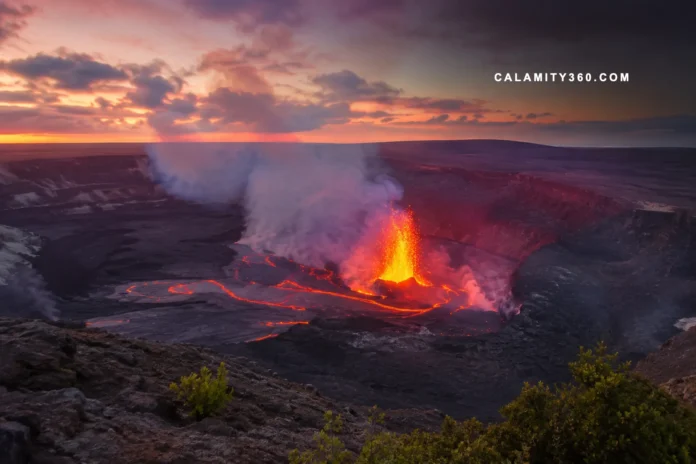

One Volcano, Many Episodes, One Lingering Question
Kilauea’s summit eruption has produced an extraordinary pattern of activity. Lava fountains have appeared repeatedly from the same summit area. Another eruptive event may arrive as episode fifty approaches.
The sequence has attracted attention because activity appears intermittent. Surface lava often disappears before returning after a pause. Many observers naturally wonder whether each return marks a new eruption.
Scientists at the Hawaiian Volcano Observatory view the situation differently. They classify these recurring lava fountain events as episodes. That distinction raises an important question about volcanic behavior.
The answer matters because volcanic activity does not always follow appearances. Visible lava represents only one part of a larger process. Conditions beneath the surface often reveal a different story. Monitoring data helps determine whether activity remains part of one eruption.
A closer look at scientific definitions provides crucial context. The difference between an eruption and an episode is significant. That distinction explains why dozens of events share one classification.
How Scientists Define an Eruption and an Episode
Volcanologists apply specific definitions when they classify volcanic activity. An eruption begins when magma rises and reaches Earth’s surface. Lava flows, lava fountains, and explosive columns all qualify.
Surface activity alone does not determine an eruption’s boundaries. Magma can continue movement below ground during visible interruptions. Short pauses therefore do not automatically signal an eruption’s conclusion.
The distinction becomes clearer when scientists examine activity continuity. A single eruption may contain multiple phases of surface expression. Those phases can vary greatly in duration and intensity.
At Kilauea, repeated activity originates from the same summit vents. The north and south vents remain the primary eruption sources. Scientists therefore view individual lava fountain events within one framework. Location consistency provides an important clue for eruption classification.
Time also plays a significant role in scientific interpretation. Previous Kilauea eruptions often entered longer dormant intervals after extended inactivity. New eruptive activity may also emerge within another volcanic region. Such changes can indicate a different chapter in volcanic behavior.
Current summit activity does not fit those historical circumstances. The pattern reflects repeated returns from an already established source. Researchers therefore identify separate episodes rather than separate eruptions. The classification reflects continuity instead of complete volcanic renewal.
This approach allows scientists to describe activity with greater precision. An eruption represents the broader volcanic event over time. Episodes identify individual periods of heightened surface expression within it.
The Distinct Cycle That Repeats at Kilauea’s Summit
Scientists have identified a remarkably consistent sequence at Halemaʻumaʻu crater. Each episode follows a recognizable progression before surface activity ceases. The recurring pattern helps distinguish one episode from another.
Early signs often appear before sustained lava fountain activity begins. Precursory spatter frequently emerges from one or both vents. Overflow activity may also occur before the main eruptive phase.
These preliminary signals can persist for extended periods beforehand. Some periods last several hours before stronger activity develops. Other periods continue for days before the sequence advances.
The cycle then enters its most visible and energetic stage. Lava fountains erupt from one or both summit vents. Episode durations vary considerably across different eruptive events. Some episodes end quickly while others continue much longer.
Fountain activity may persist for only four and one half hours. Other episodes have lasted more than eight consecutive days. Duration differences do not alter the overall pattern structure.
Surface lava activity eventually stops after the fountaining phase concludes. The volcano then enters a temporary pause between episodes. Visible activity declines even though the cycle remains incomplete.
The sequence repeats with striking consistency across successive events. Scientists use these recurring stages to define individual episodes. Each episode represents one cycle within the broader eruptive pattern.
Why Quiet Periods Do Not Mean the Eruption Has Ended
Visible lava provides only part of the volcano’s overall story. Scientists rely on several monitoring systems during inactive surface periods. Those measurements reveal conditions that remain far from dormant.
Ground deformation offers one important window into subsurface processes. Summit tiltmeters detect changes associated with pressure inside the volcano. Deflation occurs while eruptive activity removes material from underground storage. Inflation follows afterward as the summit begins renewed repressurization.
Researchers closely track these alternating pressure changes through time. The shift from one state to another follows recognizable patterns. Consistent behavior suggests continued volcanic activity beneath the surface.
Seismic instruments provide another source of critical information. Strong volcanic tremor accompanies active eruptive phases at the summit. Lower intensity tremor persists afterward rather than disappearing completely. Multiple factors influence those signals during quieter intervals.
Gas measurements reinforce evidence that volcanic processes remain active. Sulfur dioxide emissions commonly range between one thousand and five thousand tonnes daily. Those values greatly exceed levels recorded before current activity began. Combined observations indicate ongoing activity despite absent surface lava.
The Clues That Point Toward Kilauea’s Next Episode
Forecasts rely on patterns that repeatedly emerge after activity subsides. Scientists compare eruptive volume with the pace of summit recovery. Those relationships provide valuable clues about future volcanic behavior.
Current observations indicate conditions remain favorable for another episode. Summit inflation after the most recent event supports that assessment. Forecast models suggest episode fifty could occur between June twenty three and twenty seven. Researchers therefore continue close evaluation of incoming monitoring information.
Scientists also watch for evidence of magma movement elsewhere. Activity within another volcanic region could signal important changes. Such developments might alter expectations for the current eruptive sequence.
No unusual activity has appeared along major rift zones recently. Researchers continue surveillance for departures from established summit patterns. A truly new eruption would likely involve different volcanic circumstances. Until then, existing signals point toward another lava fountain episode.

CALAMITY360.com delivers global news and safety insights on earthquakes, tsunamis, volcanic eruptions, floods, wildfires, storms, and tornadoes. It provides timely updates, expert tips, and disaster-readiness information to foster awareness, preparedness, and resilience across communities worldwide.