
Chaos Strikes the Global Climate Effort
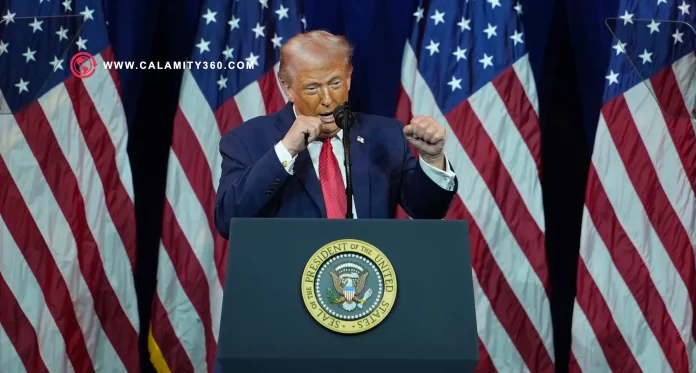
The global climate community faced shock after President Donald Trump announced that the United States would exit the 1992 UN Framework Convention on Climate Change. The move stunned diplomats who viewed the treaty as foundational to climate cooperation. Few expected the United States to abandon a pact with universal membership and decades of consensus.
The UNFCCC stood as the central venue for climate diplomacy, with 198 countries using it to coordinate efforts that slowed rising emissions. The United States played a critical role since the treaty entered into force after ratification under President George H. W. Bush. Trump’s decision pulled the first industrialized signatory from the pact and left the treaty without the country that once championed it. Global officials described the departure as an abrupt fracture in trust and collective purpose.
Trump previously criticized climate agreements but stopped short of quitting the UNFCCC in his first term. This time, his withdrawal aligned with a wider push to weaken global environmental institutions and halt international climate coordination. Officials in Washington framed the treaty as a drain on American sovereignty rather than a pillar of diplomacy. Critics argued that Trump sought to dismantle the system that underpinned the Paris Agreement and decades of emissions policies. The shock rippled through capitals that viewed U.S. participation as essential for any credible climate strategy.
The Treaty That Stood as Climate’s Global Backbone
The UNFCCC originated in the early 1990s as governments acknowledged the threat of unchecked climate pollution. Negotiators sought an international framework that would slow the rate of rising greenhouse gas levels. By 1992, the treaty opened for signature with overwhelming support from industrialized and developing nations.
The United States joined quickly after ratification under President George H. W. Bush. That move signaled that climate policy had strategic importance for American diplomacy. Universal participation reinforced the idea that the warming problem required shared responsibility across borders.
The treaty served as the anchor for later agreements that focused on carbon reductions and accountability. The most high profile of these arrangements became the 2015 Paris Agreement. That pact encouraged nations to submit increasingly ambitious climate plans in five year cycles. Paris largely functioned because the UNFCCC provided negotiation rules and scientific assessments. It also offered a forum for disputes and coordination among stakeholders.
U.S. administrations across three decades pushed for stronger emission rules and verification systems. President Bill Clinton emphasized market mechanisms that reduced pollution through cost savings. President Barack Obama pushed for transparency provisions that compelled nations to report and validate emission data. President Joe Biden sought to expand global commitments that phased out fossil fuel subsidies and accelerated clean energy deployment. Each strategy relied upon U.S. leverage to build coalitions that moved the world toward lower emissions.
The treaty’s core strength rested in universal membership and consensus based rulemaking. Every country had a seat at the table and a voice in shaping climate policy. That structure avoided diplomatic isolation and gave smaller nations influence over decisions that directly affected their survival. Island states demanded ambition as rising seas threatened their populations. Larger emitters focused on economic implications and technological pathways.
From Bush through Biden, American negotiators often served as brokers who bridged gaps between wealthy nations and developing economies. They pushed European allies to accept flexible market systems and pushed emerging economies to accept monitoring of national progress. The result was a system that, while imperfect, maintained steady engagement among all major emitters. Without U.S. involvement, many delegates argued that the Paris Agreement could not have materialized at all.
The UNFCCC also provided a scientific foundation through assessments that informed national policies and corporate strategies. Climate models guided health planning, infrastructure investments, and emergency management decisions in dozens of countries. The treaty institutionalized scientific authority in a space that had previously lacked clear benchmarks. That structure connected climate diplomacy with measurable environmental outcomes rather than abstract political commitments.
When Trump reversed the United States position, the blow cut deeper because the country served as a central architect of the system. American diplomats refined compliance rules, financial pledges, and data reporting standards. U.S. leadership helped unify developed and developing blocs that often disagreed over responsibility for climate damage. The withdrawal left a leadership vacuum that China and the European Union later attempted to fill.
Trump’s Justification and the Shockwave of Criticism
Trump defended the withdrawal as an act that restored national autonomy. He argued that climate institutions siphoned resources without clear benefits. White House advisers echoed that theme and framed climate diplomacy as hostile to U.S. interests.
Secretary of State Marco Rubio asserted that international organizations sought to constrain American sovereignty. Rubio claimed that climate bodies advanced ideological goals at the expense of national power. He stated that taxpayer funds should not support foreign commitments.
The administration highlighted economic concerns as justification for the withdrawal. Officials argued that carbon rules raised energy prices and hurt industrial competitiveness. They asserted that climate frameworks undermined fossil fuel revenue and harmed strategic sectors. The White House claimed that the United States subsidized other countries without reciprocal gains.
Critics countered that Trump’s narrative ignored financial and security advantages from climate cooperation. Former negotiators noted that U.S. leadership shaped global rules that previously favored American companies. Business coalitions argued that clean energy markets created jobs and attracted investment. Legal experts warned that withdrawal severely weakened diplomatic leverage.
Former climate chiefs described the decision as reckless, short sighted, and historically unprecedented. They argued that the United States abandoned a central pillar of foreign policy for domestic politics. Environmental groups warned of higher pollution, deteriorating public health, and reduced economic competitiveness. Allies worried that the move strengthened adversaries who opposed climate progress. Several diplomats said that U.S. reliability in treaty commitments faced serious damage.
European leaders expressed concern that global emissions cuts would stall without U.S. engagement. Island nations said that American retreat jeopardized their survival as seas continued to rise. Asia Pacific allies feared that strategic rivalries would intensify without stable climate partnerships. Observers noted that the withdrawal coincided with the hottest decade on record. Analysts warned of trade frictions as countries adopted carbon border measures without U.S. alignment.
Former Obama and Biden officials stressed the geopolitical ramifications of Trump’s pivot. They argued that China and the European Union could dominate future climate talks and standards. Defense experts pointed to climate related instability that threatened global supply chains. Health officials raised alarms that air pollution costs would surge without emissions controls. Financial analysts predicted that American firms would lose access to growing clean technology markets.
Environmental organizations argued that the administration sacrificed long term prosperity in exchange for symbolic sovereignty gestures. Labor advocates said the withdrawal left workers unprepared for international energy shifts. Religious coalitions appealed to moral responsibility and stewardship toward future generations. Governors and mayors pledged to maintain climate commitments despite federal abandonment.
Foreign policy scholars described a dismantling of U.S. credibility that extended beyond climate. They noted that allies could not rely on multi decade alignment if treaty membership fluctuated from administration to administration. They warned that adversaries benefited from weakened Western coordination on energy, technology, and trade. The withdrawal sparked debate about constitutional limits on executive power and treaty exit authority.
The Fallout for U.S. Power and a Warming Planet
Trump’s withdrawal from the UNFCCC weakened America’s influence in global climate negotiations. Diplomatic channels that once relied on U.S. leadership now face uncertainty. Allies expressed concerns that future agreements may lack enforceable commitments.
The exit disrupted international cooperation on emissions standards, energy transition, and technological sharing. Countries that previously aligned with U.S. climate policies now pursue independent strategies. Trade disputes could escalate as nations implement carbon taxes without U.S. coordination. Environmental researchers warned that access to collaborative scientific data may decline.
Record global temperatures compounded the urgency of coordinated climate action. Trump’s fossil fuel alliances contrasted sharply with nations phasing down emissions. Military strategies increasingly intersect with climate risks, particularly in resource rich regions. Analysts noted that climate instability could exacerbate geopolitical tensions worldwide.
American competitiveness faced threats as foreign clean energy industries gained market advantage. Job creation in renewable sectors slowed due to policy rollback. Investment incentives for low carbon technologies weakened across multiple states. Corporations lost clarity on national standards for emissions reductions and reporting.
Public health outcomes could worsen as air quality deteriorates from unregulated emissions. Hospitals and healthcare systems may face higher respiratory illness rates. Communities near industrial sites will bear disproportionate pollution impacts. Energy bills may rise as fossil fuel markets respond to global uncertainty.
The U.S. energy transition faced delays as federal policies favored fossil fuel expansion. Infrastructure projects that supported green energy stalled in planning and funding stages. State and local governments attempted mitigation, but federal support remained minimal. Economic analyses indicated that delaying clean energy adoption could cost billions in lost productivity. Energy sector lobbying increasingly influenced policy decisions, undermining climate goals.
Global climate frameworks must now navigate without the United States as a key contributor. China and the European Union attempted to fill the leadership vacuum left by withdrawal. Analysts warned that fractured diplomacy could hinder enforcement of future emission reduction agreements. The planet faces higher risks of extreme weather events, sea level rise, and resource scarcity.
A Fractured Future for Climate Leadership and Treaties
Legal experts debated whether a future president could reenter the UNFCCC without a new Senate vote. Some argued that withdrawal gave excessive power to the executive branch. Others maintained that rejoining could occur through executive action alone, restoring U.S. participation.
The weakening of multilateral frameworks left global climate diplomacy more fragmented than ever. Nations may prioritize regional agreements or bilateral deals over comprehensive cooperation. Without U.S. leadership, enforcement mechanisms and financial support for climate action face uncertainty. This fragmentation could slow progress on reducing greenhouse gas emissions worldwide.
Generational stakes of the withdrawal are immense, affecting long term environmental and economic stability. Future leaders may struggle to regain credibility in negotiations or restore trust among allies. Young populations face higher exposure to extreme weather, sea level rise, and food insecurity. The dismantling of climate architecture risks leaving irreversible damage to ecosystems and vulnerable communities. Efforts to rebuild frameworks may require decades of negotiation and financial commitment.
The path forward depends on political shifts, judicial interpretations, and international pressure on the United States. Successor administrations could restore global leadership, but the reputational cost may linger. Multilateral treaties may need reform to prevent unilateral withdrawals from derailing progress. The global community faces a pivotal choice between cooperation and fragmentation in addressing the climate crisis.

CALAMITY360.com delivers global news and safety insights on earthquakes, tsunamis, volcanic eruptions, floods, wildfires, storms, and tornadoes. It provides timely updates, expert tips, and disaster-readiness information to foster awareness, preparedness, and resilience across communities worldwide.