
Ash, Fire, and Shock Above Quiet Mediterranean Waters
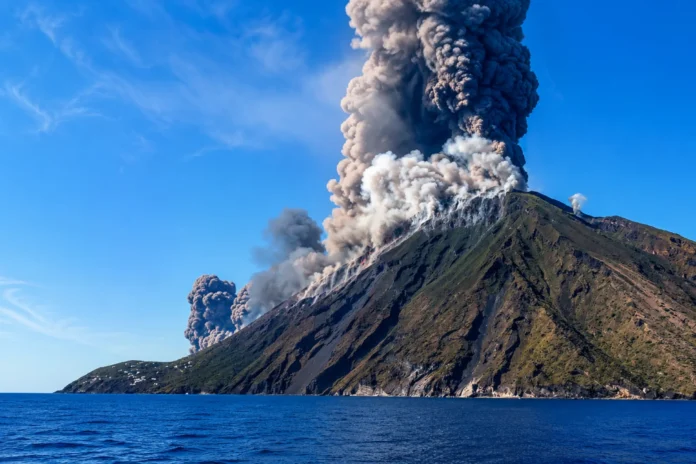
Before sunrise reached Italy’s southern coastlines, Stromboli volcano unleashed a powerful explosive eruption. Italy’s National Institute of Geophysics and Volcanology confirmed the major explosion shortly afterward. Surveillance systems captured dramatic volcanic activity near Stromboli’s northern crater area during darkness.
Meanwhile, observatory cameras recorded incandescent material ejecting violently from the active volcanic crater. Most volcanic debris later descended onto the upper slopes of Sciara del Fuoco. Scientists carefully reviewed surveillance footage while monitoring systems tracked additional volcanic behavior afterward.
At approximately 05:12 UTC, seismic instruments detected abnormal volcanic signals beneath Stromboli volcano. Researchers observed moderate amplitude increases during several minutes immediately following the explosive eruption. The seismic signal later weakened rapidly before eventually stabilizing near ordinary background values. Scientists nevertheless maintained close surveillance because Stromboli remains among Earth’s most persistently active volcanoes.
Elsewhere, high frequency GNSS monitoring systems detected no substantial ground deformation after the explosion. Researchers additionally reported no unusual increases involving subsequent explosive events around Stromboli afterward. Officials nevertheless continued surveillance operations because major volcanic explosions often precede unpredictable eruptive activity.
Above the Mediterranean Sea, Stromboli continues attracting scientific attention because of persistent eruptive behavior. The volcano occupies Italy’s Aeolian Islands northward from Sicily beside important maritime routes. According to Italian researchers, major Stromboli explosions can eject dangerous incandescent material beyond crater terraces.
Seismic Signals Reveal Sudden Violence Beneath Stromboli
Following the early morning explosion, seismic instruments immediately detected unusual underground volcanic activity afterward. Researchers recorded abnormal seismic amplitudes associated directly with the powerful June twelfth eruption event. Monitoring systems tracked rapid underground changes beneath Stromboli shortly after the explosive volcanic release.
Meanwhile, scientists observed moderate seismic amplitude increases during approximately eight minutes after eruption onset. Researchers later confirmed the strongest signal occurred simultaneously beside Stromboli’s northern crater region. Seismic activity afterward rapidly declined before stabilizing near medium background volcanic levels again.
At the observatory, surveillance cameras captured dramatic eruptive behavior throughout the northern crater area overnight. Scientists observed incandescent material ejecting forcefully before descending toward Sciara del Fuoco afterward. Researchers carefully compared seismic records alongside surveillance footage for accurate volcanic activity assessments. Monitoring experts additionally reviewed underground volcanic behavior because Stromboli frequently produces unpredictable explosive episodes.
Elsewhere, volcanologists reported no substantial increases involving subsequent explosive events after the eruption. Monitoring stations additionally detected no meaningful ground deformation beneath Stromboli following the explosion afterward. Scientists nevertheless maintained heightened observational focus because persistent volcanic systems can rapidly destabilize unexpectedly.
Across volcanic research communities, Stromboli remains an important natural laboratory for eruption surveillance worldwide. Scientists closely monitor seismic signals because underground pressure changes often precede dangerous explosive activity. Advanced monitoring technology therefore remains essential for rapid hazard assessments surrounding persistently active volcanic systems.
Incandescent Material Falls Across Dangerous Crater Slopes
Following the intense explosion, incandescent volcanic material descended across Stromboli’s upper crater slopes afterward. Most ejected debris landed within the upper section surrounding Sciara del Fuoco afterward. Scientists closely monitored impacted zones because unstable volcanic material can trigger additional dangerous hazards.
Meanwhile, surveillance footage revealed glowing fragments ejecting violently beyond Stromboli’s crater terrace overnight. Researchers described the eruption as a higher energy explosive event involving substantial volcanic force. Despite dramatic visuals, officials reported no dangerous impacts beyond upper volcanic slope regions afterward.
Across Stromboli, the Sciara del Fuoco remains among the volcano’s most hazardous geographic features. This steep volcanic depression channels lava, rocks, ash, and debris toward surrounding coastal waters. Scientists therefore maintain continuous monitoring because explosive activity frequently affects this dangerous volcanic corridor. Persistent eruptive behavior additionally increases long term instability surrounding Stromboli’s crater terrace and upper slopes.
Elsewhere, volcanologists emphasized that major Stromboli explosions can rapidly threaten nearby observation areas unexpectedly. Incandescent projectiles occasionally travel beyond crater boundaries during stronger explosive volcanic episodes throughout history. Risk assessments therefore remain essential despite limited impact zones during this particular eruption event.
Above Italy’s Aeolian Islands, Stromboli continues shaping scientific concern because of persistent eruptive behavior. Researchers closely evaluate each explosive event for possible warning signs involving larger volcanic instability. Nearby communities and maritime authorities consequently depend heavily upon accurate volcanic hazard assessments daily.
Mediterranean Volcanoes Continue Challenging Scientific Limits
After Stromboli’s latest explosion, scientists again confronted volcanic unpredictability despite sophisticated monitoring technology. Persistently active volcanoes continue challenging researchers because underground geological pressure changes remain difficult. Advanced surveillance systems nevertheless provide critical warning capabilities during dangerous volcanic activity across vulnerable regions.
Meanwhile, observatories worldwide increasingly depend upon seismic instruments, satellite systems, and thermal surveillance technologies. Scientists carefully analyze volcanic signals because isolated eruptions sometimes precede larger explosive events unexpectedly. Public safety officials additionally rely heavily upon continuous monitoring for rapid emergency response coordination. Stromboli therefore remains an internationally significant volcanic laboratory because of frequent eruptive behavior patterns.
Across Mediterranean communities, active volcanoes continue shaping disaster preparedness discussions among scientists and authorities. Researchers understand volcanic systems can rapidly change despite seemingly stable conditions during surveillance periods. Consequently, even isolated eruptions continue attracting international attention from nearby residents and global scientific communities.

CALAMITY360.com delivers global news and safety insights on earthquakes, tsunamis, volcanic eruptions, floods, wildfires, storms, and tornadoes. It provides timely updates, expert tips, and disaster-readiness information to foster awareness, preparedness, and resilience across communities worldwide.