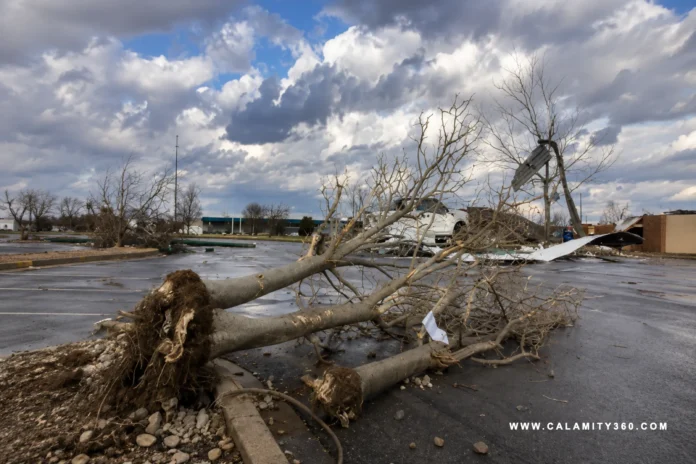

Skies Turn Violent Across West Michigan Communities
Severe thunderstorms swept across West Michigan during dangerous nighttime weather late Thursday evening. The National Weather Service confirmed two tornadoes touched down during the regional outbreak. Officials identified one tornado near Alto and another within Barry County afterward.
Meanwhile, powerful storms stretched far beyond Michigan and affected multiple Midwestern states overnight. Emergency crews responded across damaged communities as severe weather disrupted transportation and electrical systems. More than 221,000 Illinois customers lost power after intense storms crossed the Prairie State.
Meteorologists classified both Michigan tornadoes as weaker EF-0 twisters after preliminary assessments. Officials estimated wind speeds ranged between sixty five and eighty five miles hourly. Although weaker tornadoes usually produce limited destruction, dangerous conditions still threaten nearby residents. Communities throughout West Michigan therefore faced frightening nighttime conditions beneath rapidly intensifying storm systems.
Weak Tornadoes Still Carry Serious Local Dangers
Consequently, meteorologists continue careful evaluation of weaker tornadoes across vulnerable Michigan communities today. The Enhanced Fujita Scale measures tornado strength through estimated wind speeds and resulting damage. EF-0 tornadoes represent the weakest category within the official tornado classification system.
Officials estimate EF-0 tornadoes produce winds between sixty five and eighty five miles hourly. Even weaker tornadoes can uproot trees and damage roofs, fences, and power lines. Flying debris from weaker tornadoes also creates substantial dangers for nearby residents unexpectedly.
Additionally, localized tornado damage often creates serious disruptions despite relatively limited storm intensity levels. Emergency crews frequently respond after weaker tornadoes strike residential neighborhoods and transportation corridors statewide. Downed utility lines and damaged structures sometimes leave communities without electricity or safe road access. Nighttime tornadoes create additional hazards because limited visibility reduces public awareness during dangerous weather.
Michigan also experienced several tornado confirmations before Thursday’s severe weather outbreak occurred statewide recently. Two tornadoes previously touched down Tuesday when another storm system crossed Michigan communities. Officials confirmed an EF-1 tornado near Freeland and an EF-U tornado near Montrose.
Meanwhile, meteorologists recorded twenty confirmed tornadoes throughout Michigan during the current 2026 season. Nine tornadoes occurred during severe outbreaks between April fourteenth and April twenty fifth statewide. Although most tornadoes remained weaker, weather experts still urged serious public preparedness across Michigan.
Storm Systems Stretch Chaos Across Multiple States
Meanwhile, severe storms extended far beyond Michigan and swept across neighboring Midwestern states overnight. The National Weather Service confirmed additional tornado touchdowns across Illinois and northern Indiana afterward. These widespread storms disrupted electrical systems and threatened millions throughout densely populated regional communities.
Illinois experienced some of the most significant disruptions after violent storms crossed statewide Thursday. Officials confirmed at least three tornadoes touched down during dangerous overnight weather conditions. More than 221,000 customers also lost electricity after powerful winds damaged regional infrastructure networks.
Furthermore, Indiana also faced confirmed tornado activity as severe weather intensified throughout surrounding areas. Emergency officials monitored dangerous storm cells because conditions changed rapidly across multiple communities. Meteorologists warned additional severe thunderstorms could develop whenever unstable atmospheric conditions remain favorable. Large storm systems therefore continue serious threats across heavily populated sections throughout the Midwest.
Weather experts explained these regional outbreaks often span several states during active severe periods. Powerful atmospheric systems can generate tornadoes, destructive winds, hail, and dangerous flash flooding simultaneously. Communities hundreds of miles apart sometimes experience similar weather threats within identical storm systems.
Accordingly, Midwest residents continue heightened alert status whenever severe weather watches appear regionally today. Emergency agencies urged residents toward weather awareness because nighttime storms reduce public reaction times. Meteorologists also stressed preparedness since tornado outbreaks can rapidly expand across multiple neighboring states.
Michigan Faces Another Year of Persistent Tornado Threats
Ultimately, Michigan continues another active tornado season with steadily rising storm confirmation totals statewide. Officials confirmed twenty tornadoes across Michigan during 2026 before summer weather reached peak intensity. Most tornadoes remained weaker, yet dangerous conditions still threatened homes, businesses, and infrastructure.
Meanwhile, weather experts stressed weaker tornadoes still deserve serious public attention throughout vulnerable communities. Even EF-0 tornadoes can damage structures, disrupt electricity, and create dangerous airborne debris unexpectedly. Nighttime storms especially challenge residents because darkness limits visibility and delays emergency response decisions.
Communities throughout the Midwest therefore face continued uncertainty whenever severe weather systems intensify rapidly. Meteorologists warned unpredictable storm patterns may continue frequent tornado threats across multiple regional states. Public preparedness, weather awareness, and rapid emergency communication now remain essential community defenses against disasters. Residents cannot ignore weaker tornadoes because sudden conditions still produce destructive and life threatening consequences.

CALAMITY360.com delivers global news and safety insights on earthquakes, tsunamis, volcanic eruptions, floods, wildfires, storms, and tornadoes. It provides timely updates, expert tips, and disaster-readiness information to foster awareness, preparedness, and resilience across communities worldwide.